


ayaka nakamura 個展「Spring」によせて
モチーフや物語を超え、エネルギーの運動そのものを絵画の構造として扱う
On Ayaka Nakamura’s Solo Exhibition Spring.
Beyond motif and narrative, treating the movement of energy itself as the structure of painting.
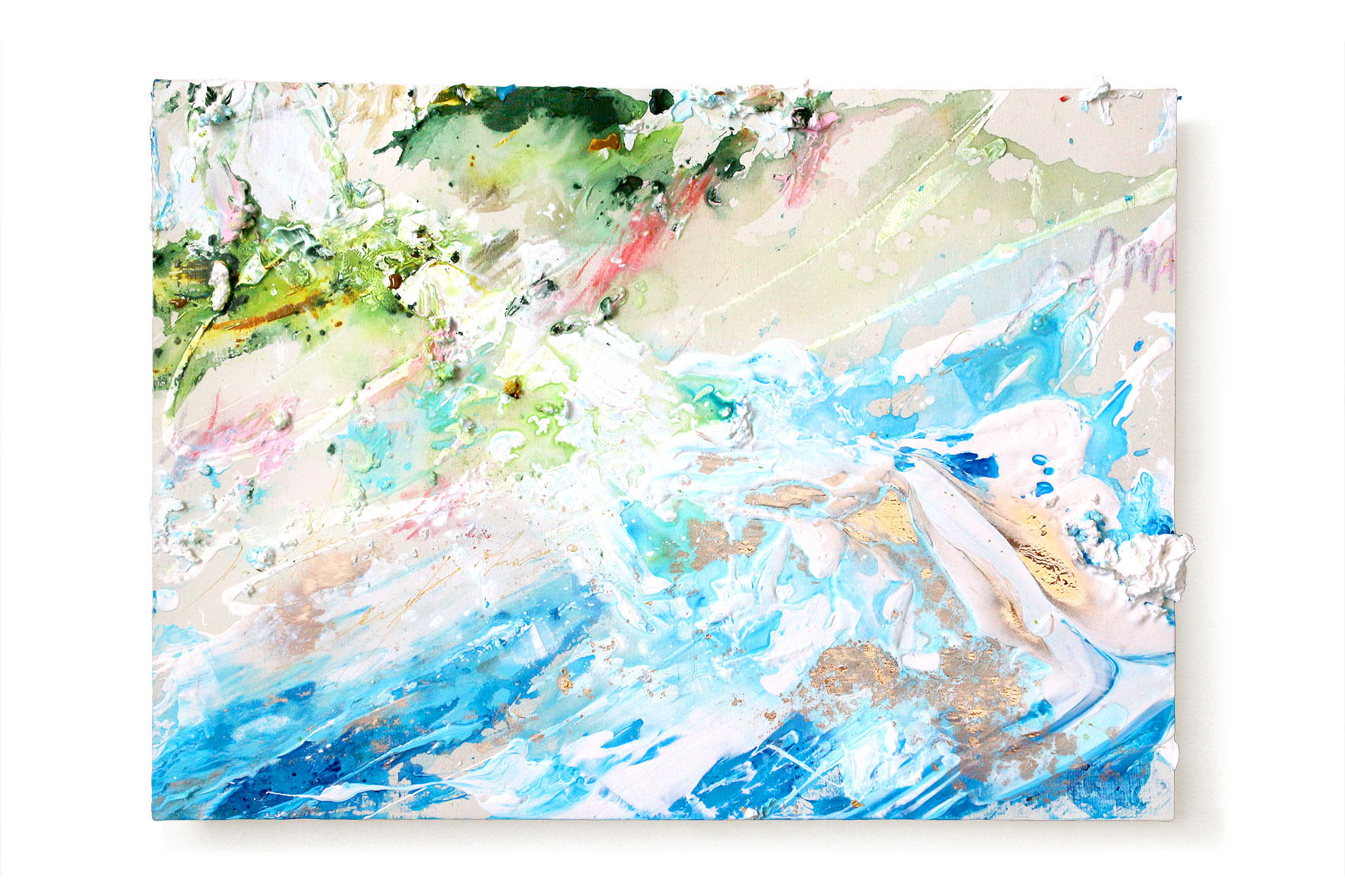
渋谷ヒカリエのShinQs Gallery 5で開催されているayaka nakamuraさんの個展『Spring』に訪れた。
表題の「Spring」は単なる季節ではなく、生命の立ち上がりや状態の移行を示すメタファーとして扱われている。
それは“変化が起こる直前の気配”を視覚化する試みであり、「命の存在(existence of life)」の可視化に収斂している。
特筆すべきは、それを「モチーフで語らない」「物語で説明しない」という点であり、代わりに「エネルギーの運動そのもの=絵画の構造」として扱っていることだろう。
一見「風景画」に見える作品群だが、実際には真逆であり、彼女が採取したであろう風景はトリガーでしかない。
そのため構図としてのモチーフは固定されず、単一の遠近法を持つこともなく、視点が分散され、重力方向が曖昧となっている。
つまり空間が“描かれる”のではなく、画面内で“発生する”――という風景の「再現」を超えた「生成」が行われている。
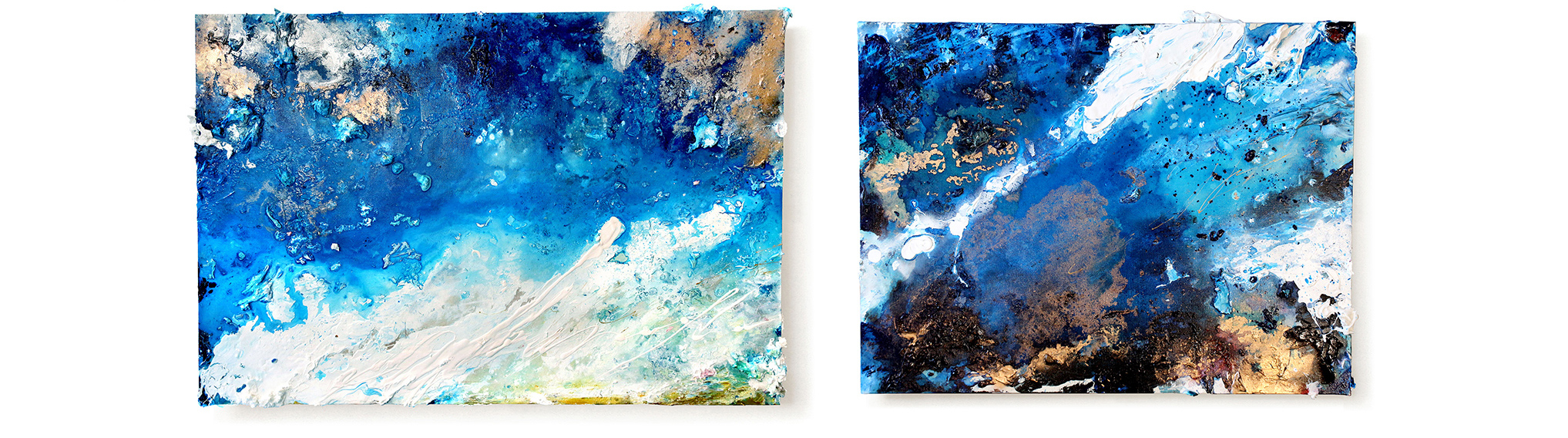
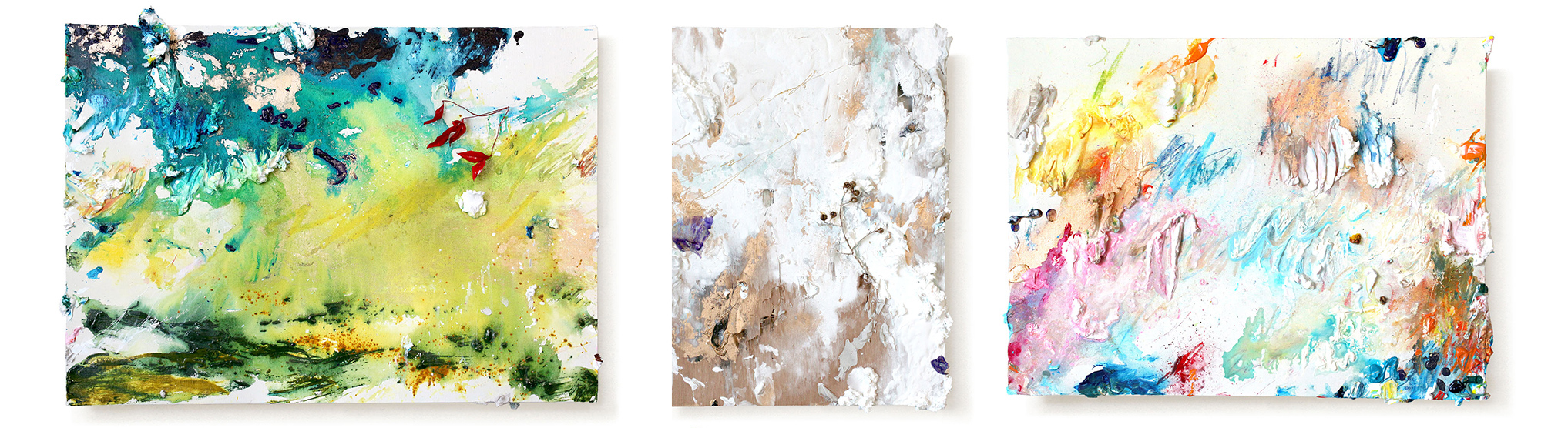
彼女の作品の技術的特徴としては、アクリル絵具と反射性のメッキ調顔料を基本素材とし、半透明層の反復と不均一な塗り重ねと意図的なにじみによる拡散といったレイヤー構造が見られる。
これは光が「乗る」のではなく「内部で反射する」ため、視線が表面で止まらない効果を生み出す。
古典的に言えばターナー的な大気層、あるいは抽象表現主義のオールオーバー構造に近いが、彼女の場合はより“粒子的”で、“流体的”といえる。
今回の新作には彼女の特徴がよく現れている。
ライブペイント由来の高速ストロークや、形より運動を重視するリズム優先の即興性は観る者の心を揺さぶる。
しかし、層の順序はコントロールされ、圧や速度、強弱が緻密に計算されている。
つまり「偶然に見えるが、偶然ではない」筆致。
これが、観る側に「自然に見える必然性」を感じさせているのかもしれない。
さらに彼女の作品には典型的な視覚体験がある。
作品を遠目では色と運動の「抽象」と感じるが、作品に近づくほどに光・水・植物の気配など、風景の断片が浮かび上がる。
これは意図的に「記憶の風景」に接続しているからだと思う。
つまり鑑賞者が自分の経験で意味を補完する――そんな仕掛けになっている。
過去の作品タイトルを見ても明確なように、彼女が描く対象は物体ではなく、風・光・エネルギーなどの「現象(気配)」だ。したがって形は固定されず、境界が溶ける。
彼女の絵画は、風景を描くのではなく、「生命のエネルギーが層として立ち上がる過程」を構造化したものなのだろう。
その揺らぐことのない制作コンセプトは、彼女の願いと一致している。
彼女は、こう語っている――
私が描く「命の存在」は、私自身と見る人が、自身の「存在」を確かめる手段でもあります。作品は見てくれる人がいてはじめて存在します。そして作品の存在が、あなたの存在に繋がることを願って。
20260329
作詞・脚本家 星みつる
I visited Ayaka Nakamura’s solo exhibition Spring, currently on view at ShinQs Gallery 5 in Shibuya Hikarie.
The title Spring is treated not simply as a season, but as a metaphor for the emergence of life and the transition from one state to another. It is an attempt to visualize the sign of a moment just before change occurs, ultimately converging on the visualization of what Nakamura calls the “existence of life.”
What is particularly striking is that this is not articulated through motif, nor explained through narrative. Instead, it is handled as the movement of energy itself—that is, as the very structure of painting.
At first glance, the works may appear to be landscapes. In reality, however, the opposite is true: the landscapes she may have gathered from the world function only as triggers. For this reason, motifs are never fixed as compositional anchors, nor do the works rely on a single-point perspective. Viewpoints are dispersed, and even the direction of gravity becomes ambiguous. In other words, space is not “depicted”; it is generated within the picture plane. What takes place here is not the reproduction of landscape, but its generation.
Technically, her works are characterized by a layered structure built from acrylic paint and reflective metallic pigments, with repeated translucent layers, uneven applications of paint, and intentional bleeding and diffusion. Because light does not merely sit on the surface but seems to reflect from within, the viewer’s gaze does not stop at the exterior plane.
In classical terms, one might compare this to Turner-like atmospheric layers or to the all-over structure of Abstract Expressionism, yet Nakamura’s work feels more particulate, more fluid.
These new works reveal her distinctive qualities especially well. The rapid strokes derived from live painting, along with an improvisational rhythm that prioritizes movement over form, deeply stir the viewer. Yet the order of the layers is controlled, and pressure, speed, and intensity are all calculated with precision. In other words, the brushwork appears accidental, but is not accidental. This may be what allows the viewer to sense a kind of inevitability that nevertheless feels natural.
There is also a characteristic visual experience in her work. From a distance, the paintings appear abstract—fields of color and motion. But as one moves closer, fragments of landscape begin to emerge: hints of light, water, and vegetation. This, I believe, is because the works are intentionally connected to remembered landscapes. The viewer is invited to complete their meaning through personal experience.
As is evident even from the titles of her past works, what Nakamura depicts is not an object, but phenomena—wind, light, energy, and other forms of presence. Accordingly, forms are never fixed, and boundaries dissolve.
Her paintings do not depict landscape; rather, they structure the process by which the energy of life rises in layers. This unwavering conceptual foundation is deeply aligned with her own artistic wish.
As Nakamura herself says:
“The ‘existence of life’ that I paint is also a means by which both I and the viewer may confirm our own existence. A work exists only when there is someone to see it. And I hope that the existence of the work will connect to your own existence.”
20260329
Screenwriter and Lyricist Hoshi Mitsuru
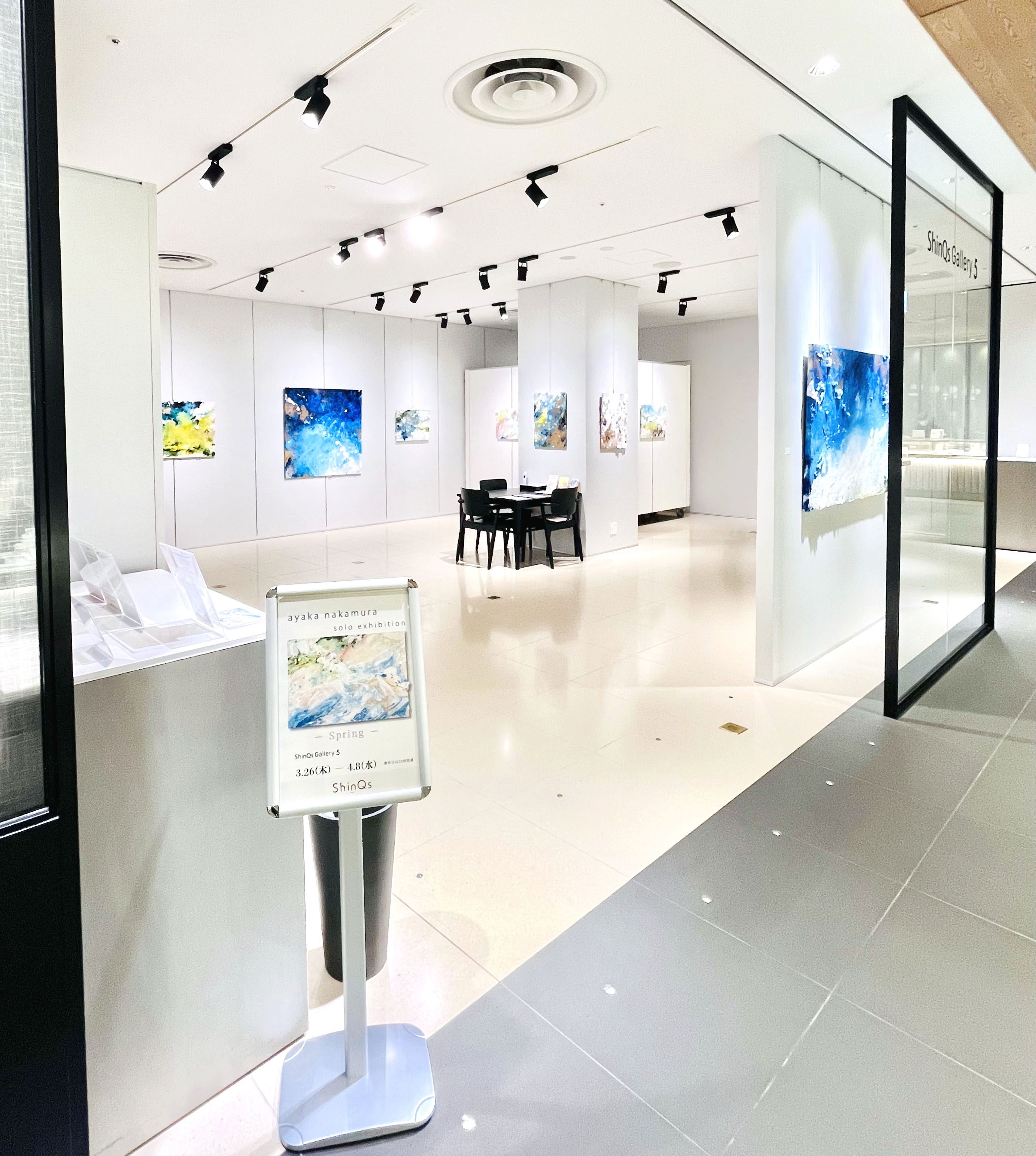
ayaka nakamura個展「Spring」
2026.03.26-04.08
ShinQs Gallery 5
渋谷ヒカリエShinQs 5階